


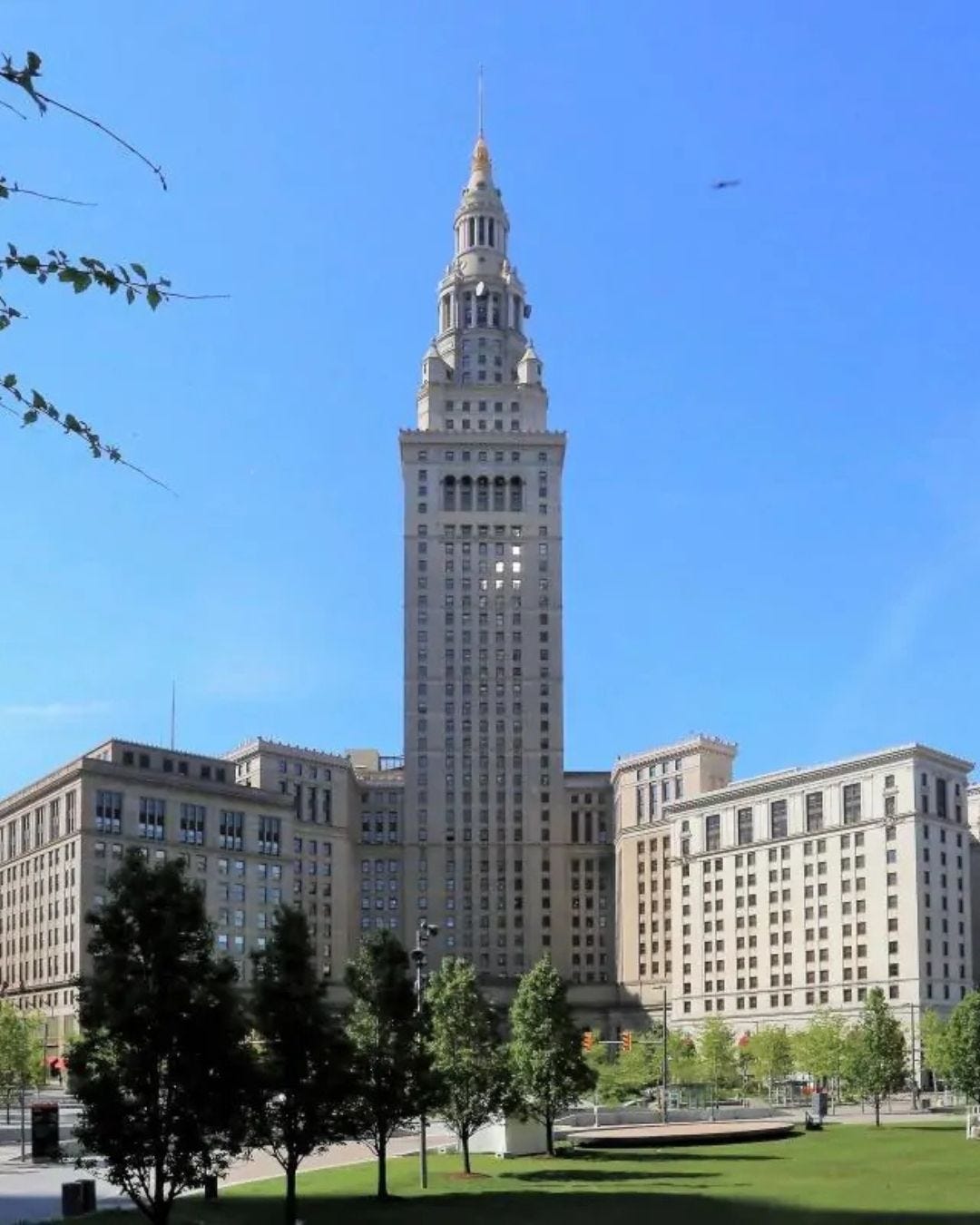
Cleveland has quietly become one of the most compelling multifamily markets in the Midwest — a city whose rent performance, adaptive reuse pipeline, and infrastructure investment tell a different story than its legacy industrial reputation might suggest.
That performance reflects years of strategic investment in adaptive reuse, walkable neighborhoods, and economic diversification that have repositioned Cleveland as a nationally recognized urban market. The city’s ranking among the world’s top cities — surpassing Hong Kong, Rio de Janeiro, and Athens in a global assessment — reflects the depth of that transformation, driven by a convergence of factors that continue to shape its real estate landscape.
Downtown Cleveland: Adaptive Reuse as a Market Driver
The defining story of downtown Cleveland’s revival is the conversion of underutilized office towers and historic commercial buildings into multifamily housing. Unlike cities that turned to adaptive reuse as a pandemic-era response, Cleveland’s approach reflects a longer strategic arc. Affordable acquisition costs for aging office inventory created the economic conditions for large-scale residential conversion, and the concentration of projects along key corridors — Euclid Corridor, Public Square, University Circle — has produced mixed-use neighborhoods with genuine live-work-play density.
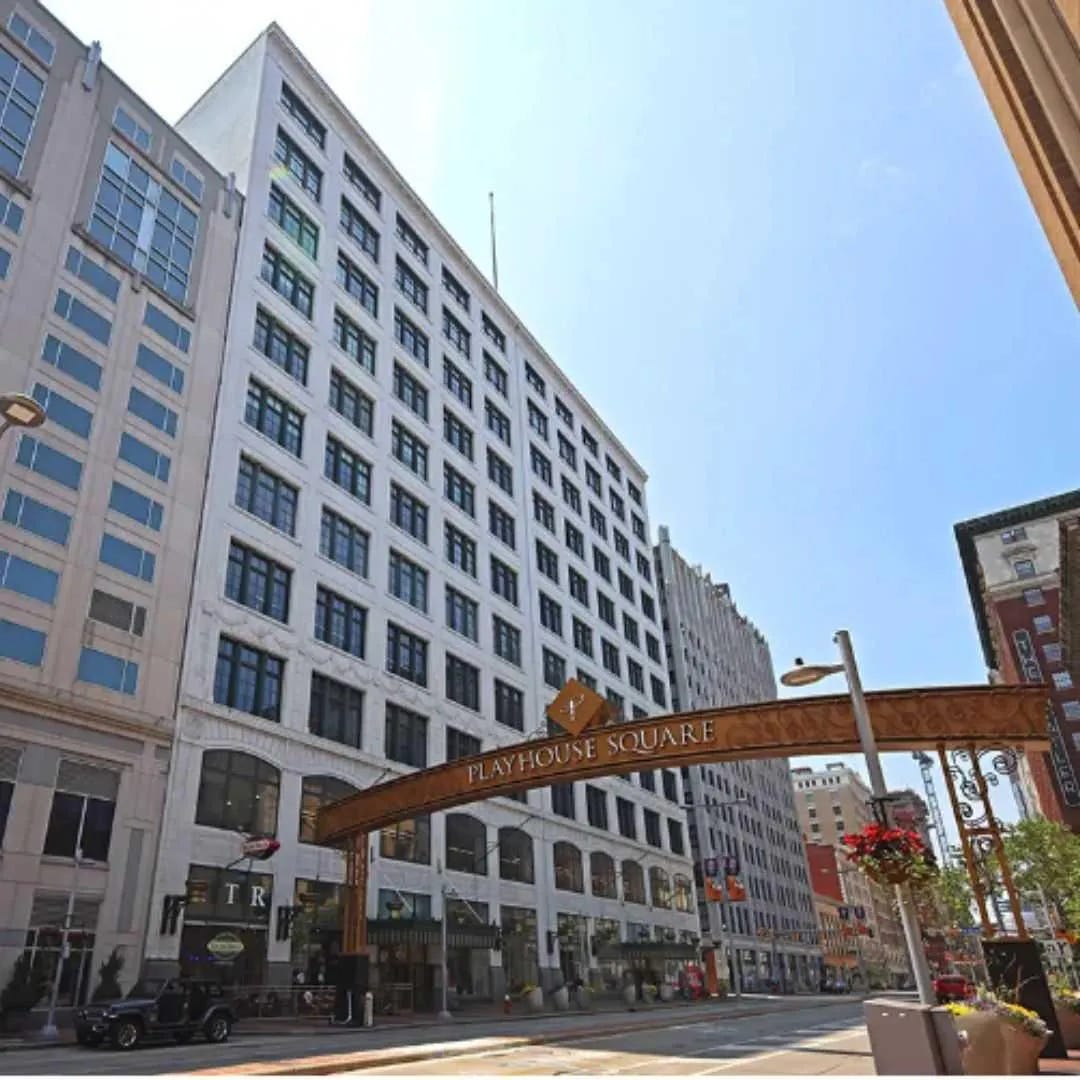
Flagship conversions include the Terminal Tower at 50 Public Square — a 297-unit mixed-use project completed in 2019 at a development cost of eighty million dollars — and the May Building at 200 Euclid Avenue, transformed into 307 apartments at a cost of one hundred sixty-five million dollars. The Schofield Building at 2000 East 9th Street, now a mixed-use property combining a Kimpton hotel with upper-floor apartments, and the Garfield Building at 1965 East 6th Street, converted into 123 apartments with a ground-floor restaurant, represent the range and depth of the downtown conversion pipeline.
The Opportunity Corridor: Infrastructure as Investment Catalyst
Cleveland’s three hundred thirty-million-dollar Opportunity Corridor — a 3.2-mile urban boulevard completed in November 2021 linking University Circle with Interstate 490 — has unlocked development potential in neighborhoods that were historically isolated from the city’s economic growth. Fairfax, Kinsman, and Slavic Village are each seeing new multifamily housing, mixed-use development, and institutional investment as a direct result.


The corridor was initially proposed as a limited-access highway. Its evolution into an urban boulevard with retained cross-street connections, pedestrian paths, and bicycle infrastructure reflects Cleveland’s broader commitment to walkable, sustainable urban design. Key intersections at East 105th, Woodland Avenue, and Buckeye Road serve as development anchors, with zoning changes in Fairfax and Kinsman supporting mixed-use and innovation districts.
The forty thousand square-foot Fairfax Market at East 105th anchors nearby multifamily projects while addressing food access in historically underserved neighborhoods. Fairfax’s New Economy and Innovation Square district leverages the Cleveland Clinic’s presence to support job growth and new housing development. Cleveland’s Site Readiness for Good Jobs Fund — a fifty-million-dollar commitment for site acquisition and brownfield cleanup along the corridor — signals continued long-term public investment in the area’s development potential.
Multifamily Market Performance
The rent and vacancy figures that follow draw on our previous research into the Cleveland market. Cleveland Metro rent growth has consistently outpaced national averages, driven by sustained demand across all building classes. Mid-tier three-star properties lead growth in the metro, reflecting strong workforce housing demand at the one thousand two-hundred-dollar range. One- and two-star affordable units maintain consistent performance supported by persistent demand for budget-conscious options, with average rents in the low-to-mid eight-hundred-dollar range. Four- and five-star luxury properties command a meaningful premium in prime locations — average rents approach or exceed one thousand eight hundred dollars per month — navigating higher vacancy rates while maintaining occupancy in established submarkets.
In the Downtown Cleveland submarket, four- and five-star properties maintain a 34% premium over three-star inventory — a spread that has held steady as new supply is absorbed into the market. The East Cleveland submarket, which encompasses the Opportunity Corridor, mirrors broader metro trends with affordable units leading growth, supported by improving infrastructure and sustained institutional investment.
The Economic Foundation
Cleveland’s economy has diversified well beyond its industrial roots, anchored by Cleveland Clinic and University Hospitals — two of the largest employers in the region and among the most significant healthcare systems nationally. The Health-Tech Corridor, a 1,600-acre zone linking downtown to University Circle, houses over 170 health-tech companies, incubators, and academic institutions. Education and health services consistently lead employment growth in the metro, outpacing national sector averages.
Corporate investment in the urban core reinforces the long-term economic case. Sherwin-Williams’ six-hundred-million-dollar headquarters expansion — including a one million square-foot campus and research facility — is projected to generate eight point six million dollars in annual tax revenue and secure 3,500 jobs, representing one of the most significant private investments in Cleveland’s downtown in decades.
As healthcare, technology, and infrastructure investment continues to compound, Cleveland’s economy is positioned for steady, long-term growth supported by institutional anchors that are not easily replicated in other markets.
Ready to go deeper on this market? Clarendon provides HUD Rent Comparability Studies, market studies, brokerage, and advisory services across major U.S. markets. To discuss your portfolio, visit clarendon.com/how-can-we-help.
What’s in the Full Market Brief


The Cleveland Market Brief includes detailed office-to-residential conversion profiles for five downtown properties, a deep dive into the Opportunity Corridor development pipeline, and multifamily metrics across the U.S., Cleveland Metro, Downtown Cleveland, and East Cleveland submarkets. Access the full brief in the Market Reports section.
Related Resources
Explore office-to-residential conversions and the Opportunity Corridor development pipeline on the MarketRent™ interactive map. For SAFMR data by ZIP code, visit the HUD FY 2026 SAFMR Lookup Tool.

Podcast • Tools • Services • Archive • About • Contact
About: Clarendon is a trusted partner for government compliance and advisory solutions, specializing in HUD-compliant services: HUD RCS, appraisals, brokerage, inspections, facility support and strategic guidance for agencies, housing authorities and property owners nationwide.
© 2026 The Clarendon Group, Inc. All Rights Reserved. Disclosure